



When selecting an underfloor heating system, decision-makers often focus on product cost, energy consumption, and long-term performance. However, one of the most important factors affecting project success is installation efficiency. A high-quality system should deliver advantages not only during operation but also throughout the installation process. For this reason, labor costs, installation speed, and ease of installation have become just as critical as thermal performance.
No matter how efficient a heating system is, excessive labor requirements increase the overall project cost. Longer installation times can delay project completion, while difficult installation procedures increase the risk of errors. As a result, contractors, installers, and project managers are no longer asking only, “Which system provides better heating?” They also want to know, “Which system installs faster, requires less labor, and reduces operational workload on site?”
This is where systems that retain their shape during installation, adapt easily to challenging layouts, and accelerate installation stand out.
Why Is Installation Efficiency So Important in Underfloor Heating?
Installation efficiency directly determines on-site performance. Every delay during installation not only increases labor hours but also affects project planning, team coordination, and delivery schedules.
In large residential developments, commercial buildings, and multi-unit housing projects, even small improvements in installation speed can translate into significant time and cost savings. Therefore, system selection should consider not only material properties but also installation performance.
An efficient installation system provides several advantages:
- Reduced Labor Time
Faster installation enables crews to complete more floor area within the same timeframe. - Lower Risk of Installation Errors
Materials that are easy to shape and control reduce the likelihood of incorrect installation. - Shorter Project Delivery Times
Faster installation makes project schedules easier to manage. - Reduced Operational Workload
Lower labor intensity improves overall productivity on site.
Installation efficiency therefore benefits not only installers but also investors and contractors.
How Does a Flexible Structure Improve Installation Performance?
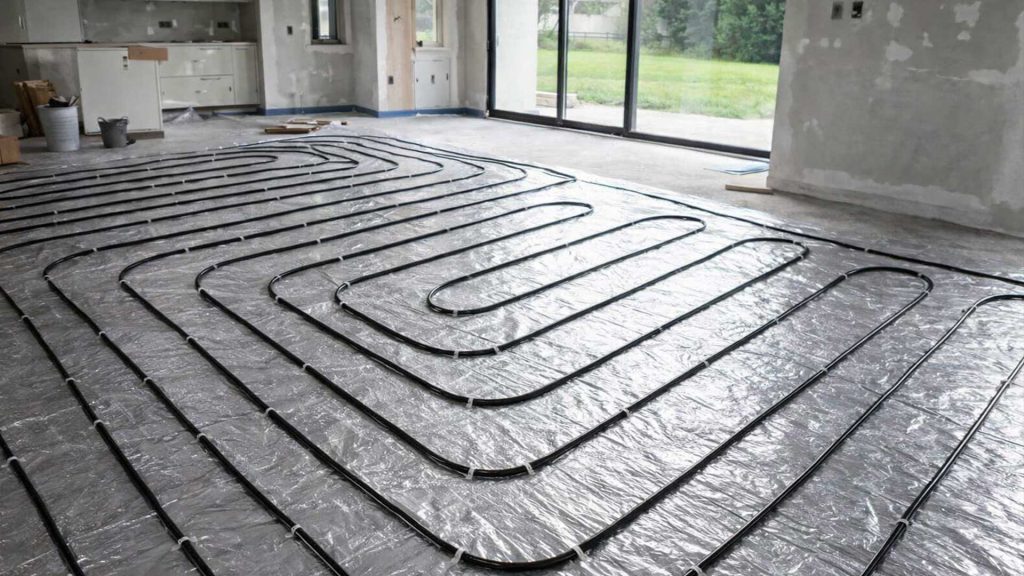
The behavior of the pipe during installation plays a critical role in underfloor heating systems. If the pipe loses its shape during installation, placing it accurately becomes more difficult, particularly around corners, confined spaces, and complex layouts.
According to the technical specifications provided, the new-generation system maintains its shape during installation while adapting easily around challenging areas. This delivers three important advantages on site:
More Controlled Installation
Shape retention allows installers to position the pipe more accurately and predictably.
Easier Installation Around Difficult Areas
Corners, narrow passages, and complicated floor plans become much easier to navigate.
Less Need for Rework
Because the pipe maintains its intended form without unwanted deformation, installers spend less time making adjustments.
By contrast, systems requiring constant reshaping demand additional labor. In some cases, they also require supplementary insulation materials or extra site intervention, increasing installation time.
Why Does Faster Installation Reduce Project Costs?
Shorter installation times do more than save time—they also improve labor efficiency. Every additional day spent on site directly increases project costs.
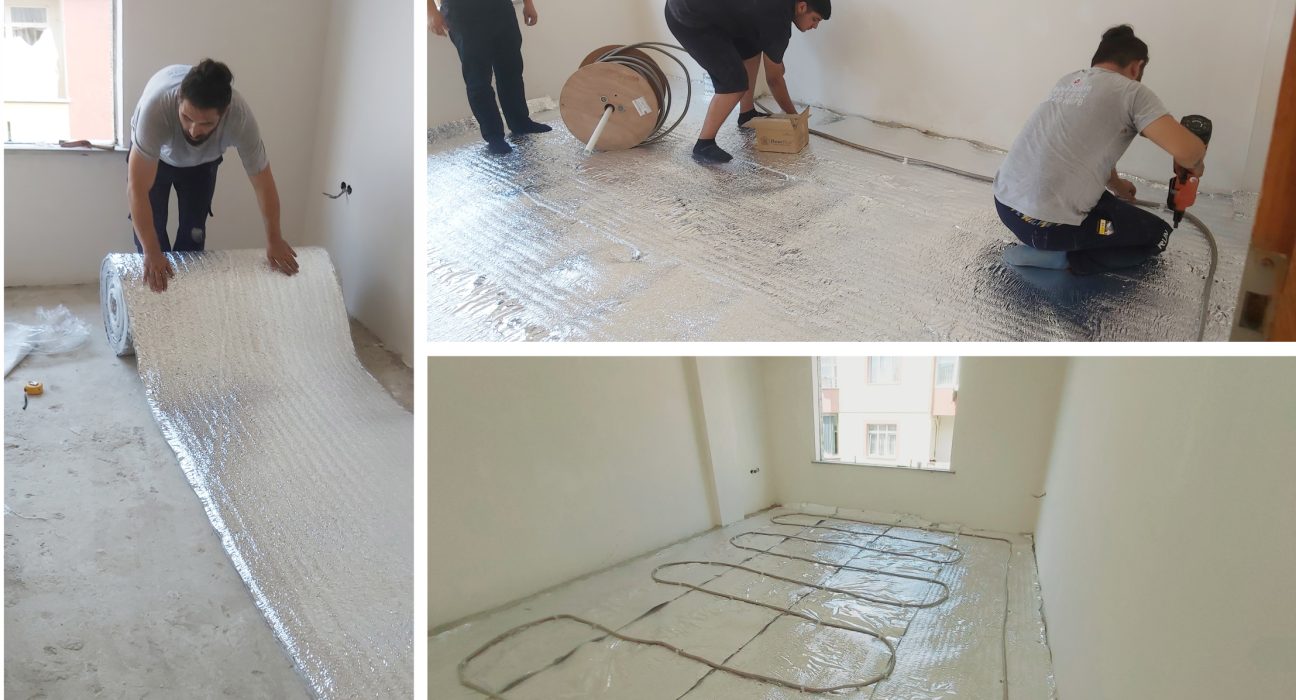
Based on the available technical data, the new-generation system enables installation teams to complete up to four apartments per day, compared to approximately one apartment per day using conventional systems.
This improvement provides clear project advantages:
- More floor area completed with the same workforce
- Better-controlled construction schedules
- Lower labor intensity
- Greater confidence in project delivery
In other words, faster installation not only simplifies operations but also increases a contractor’s project capacity.
What Does Installing Four Apartments per Day with a Two-Person Team Mean?
This figure represents a significant improvement in field productivity. Labor costs are determined not only by the number of workers but also by how much work they complete within a given period.
With the new-generation system, a two-person team can install up to four apartments per day. Conventional systems typically require insulation boards to be installed before the pipes, allowing the same team to complete only one apartment per day.
This difference produces several benefits:
Lower Labor Cost Per Unit
Higher daily productivity reduces labor costs for each apartment.
More Efficient Use of Equipment
Shorter installation periods improve the utilization of site equipment and resources.
Smoother Project Progress
Heating system installation proceeds without delaying other construction activities.
As a result, labor efficiency benefits not only installation crews but the entire construction workflow.
Why Do Conventional Systems Require More Labor?
Traditional systems generally involve multiple installation stages. Insulation boards are installed first, followed by pipe installation. This process requires more time and labor while often demanding additional adjustments to achieve proper pipe alignment.
As a result:
- More installation steps
- Higher labor demands
- Longer installation times
- Increased risk of errors and corrective work
In projects with tight delivery schedules, these disadvantages become even more apparent because slower installation affects other construction trades as well.
How Can Less Labor and Faster Delivery Be Achieved?
To maximize installation efficiency, a system should combine the following features:
Up to 45% Less Pipe Requirement
Less pipe per square meter significantly reduces installation time.
Shape-Retaining Structure
A stable pipe maintains control throughout installation.
Easy Adaptation to Complex Areas
Flexible construction simplifies installation in difficult layouts.
Simplified Installation Design
Fewer installation stages enable faster project progress.
High Daily Installation Capacity
The same installation crew should be able to complete more apartments or larger floor areas each day.
When these features are combined, the result is not only an advanced heating system but also a project-friendly installation solution.
How Does Installation Efficiency Improve Project Competitiveness?
Today, contractors and installers compete on more than product price alone. Competitive advantage increasingly depends on delivering projects faster, more efficiently, and at lower overall cost.
Systems requiring less labor and enabling faster installation provide important advantages because they allow:
- More installations within the same timeframe
- Better adherence to project deadlines
- More efficient workforce utilization
- Better control of total site costs
These benefits become especially valuable in large residential developments, repetitive installations, and projects with demanding schedules.
Conclusion: The Right System Improves Both Heating Performance and Site Performance
True efficiency in underfloor heating is measured not only by energy consumption or heat distribution but also by installation speed, labor efficiency, and site management.
Systems that retain their shape during installation, adapt easily to difficult layouts, install quickly, and allow a two-person crew to complete up to four apartments per day provide operational advantages as well as technical performance. In contrast, systems requiring greater labor input, longer installation times, and multiple installation stages increase overall project costs.
Choosing the right underfloor heating system should therefore go beyond asking, “Which product should I use?” The more important question is:
“Which system will help me complete my project more efficiently?”
Let’s Evaluate the Most Efficient Installation Solution for Your Project
If you’re looking for an underfloor heating system that reduces labor, accelerates project delivery, and provides a more controlled installation process, we’d be happy to help.
Contact us to learn more about FloorFlex solutions and identify the most suitable system configuration for your project.
info@floorflex.com.tr